The finalist projects of Map the System

Map the System is an international social innovation competition open to UNIL students (bachelor’s, master’s, and PhD). It aims to equip a new generation of decision-makers with the mindset needed to rethink our failing systems and address today’s societal challenges.
This competition is led by the HUB Entrepreneurship and Innovation in collaboration with the University of Oxford.
Discover below the research carried out by finalists from previous editions !
The finalist projects of Map the System
Map the System is an international social innovation competition open to UNIL students (bachelor’s, master’s, and PhD). It aims to equip a new generation of decision-makers with the mindset needed to rethink our failing systems and address today’s societal challenges.
This competition is led by the HUB Entrepreneurship and Innovation in collaboration with the University of Oxford.
Discover below the work carried out by finalists from previous editions !
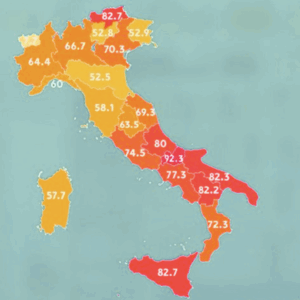
Barriers beneath the law: a systems analysis of abortion access in Italy
Abortion has been legal in Italy since 1978. Yet for many women, access to abortion is still an obstacle course. Between unreasonable delays, refusal of care, moral pressure and lack of support, the theoretical right in no way guarantees real access.
Using a systems thinking lens, this work uncovers how institutional design, informal workplace dynamics, and entrenched stigma systematically undermine a legal right. What is often framed as an issue of individual conscientious objection is revealed as a deeper structural dysfunction, especially acute in under-resourced regions. The analysis highlights key feedback loops that sustain disparities: stigma-driven silence, healthcare fragmentation, and the growing presence of ideological actors into public services. It identifies leverage points for change, from revising legal frameworks to reframing abortion as standard healthcare and amplifying marginalized voices. By shifting the focus from an individual moral stance to systemic forces, this work contributes to broader conversations on reproductive justice and how legal rights can be quietly eroded without ever being formally revoked.
Discover her work here and her cartography here
🏆 Winner of the 2025 edition (UNIL)


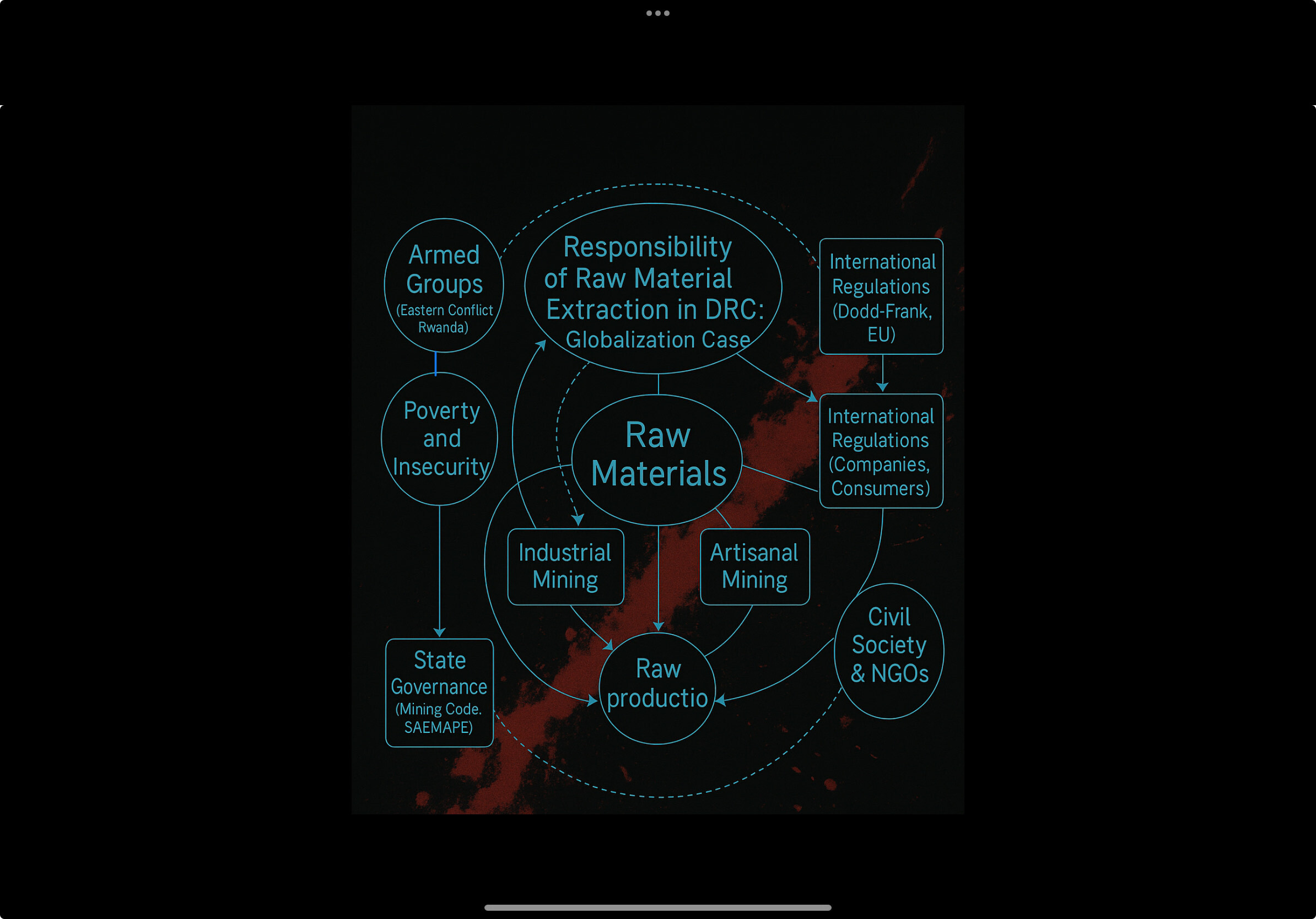
Complexité systémique de l’exploitation des matières premières en RDC dans un contexte mondialisé
The Democratic Republic of Congo (DRC) is one of the world's richest countries in terms of natural resources, but also one of the most marked by poverty, armed conflict and instability. This paradox raises a central question: why does mining, supposedly a source of development, actually perpetuate suffering and inequality?
This paper explores the multiple layers of systemic complexity surrounding the exploitation of raw materials in the DRC. It analyzes how the intersecting interests of armed groups, multinationals, neighboring states, international institutions and consumers in the global North fuel a violent and inequitable extractive system. Through a mapping of actors, feedback loops and a multi-level diagnosis, the work highlights the obstacles to structural change, while underlining avenues of inspiration from other contexts (Sierra Leone, Nigeria). It calls for binding mechanisms, better local governance and a global awareness of the human cost of ecological transition.
Discover her work here and her cartography here

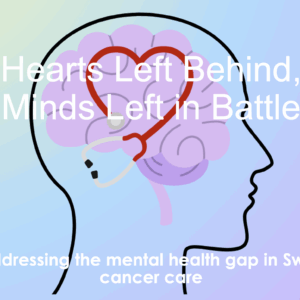
Healing the body, ignoring the mind: the systemic failure in cancer treatment
Cancer is a devastating illness, not only physically, but also psychologically. It is an ordeal often marked by stress, loneliness and untreated post-traumatic disorders. Yet, in Switzerland as elsewhere, the healthcare system continues to focus on the body, while neglecting the mind.
This work explores the systemic gap between the medical treatment of cancer and the psychological care of patients, highlighting shortcomings, root causes and avenues for transformation.
Using a systemic approach, it highlights the role of mental health stigma, lack of funding and poor access to psychological services. This work also highlights the potential of existing interventions, and calls for concrete action to offer patients a real chance of a full recovery.
Discover her work here

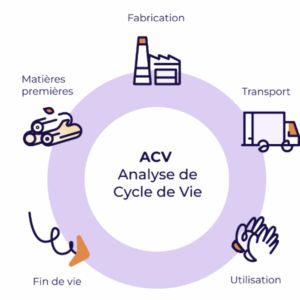
Les barrières à l’accessibilité, la diffusion et la compréhension de l’analyse du cycle de vie dans la zone EuroLes barrières à l’accessibilité, la diffusion et la compréhension de l’analyse du cycle de vie dans la zone Euro
Life Cycle Assessment (LCA) is an essential tool for assessing the environmental impact of products and services. Yet, despite its potential, it remains little adopted, poorly understood and difficult to access for companies and European citizens alike.
This study explores the systemic obstacles that limit the integration of LCA into economic practices in the Eurozone. By mapping the stakeholders (companies, governments, NGOs, experts, consumers) and dynamics at work, it highlights the root causes: technical complexity, lack of standardization, opacity of supply chains, information overload for consumers, and institutional or industrial inertia. It shows how these obstacles produce a cascade of effects, from mistrust to misinformation and greenwashing, and proposes levers for change: methodological simplification, digitization, more stringent regulations and large-scale training.
Discover their work here and their cartography here
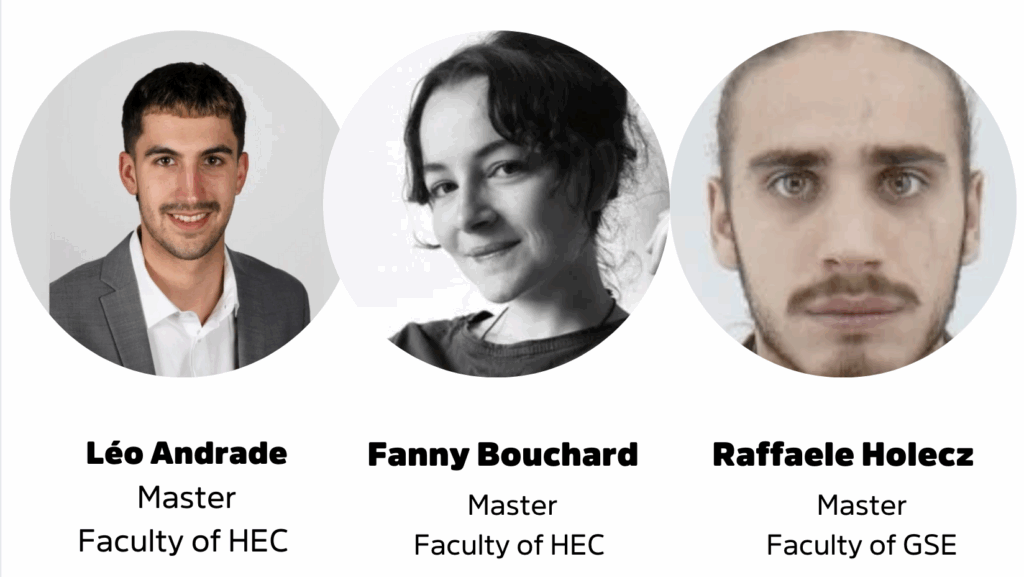
Manque de contrôle sur la dissémination de l’identité numérique sur internet
Every day, millions of pieces of personal data are captured, exchanged and analyzed, often without our knowledge. In a world where each individual has an average of 168 digital accounts, our online identity is fragmented, exploited and largely beyond our control. What remains of our consent?
This work explores the invisible dynamics governing the dissemination of digital identity in the age of Big Data. Through a systemic analysis, it identifies the key players (users, digital giants, regulators, privacy advocates) and reveals the loops of algorithmic capture and “false consent” that feed an opaque system. Despite legal, technological and educational interventions, there are still many limitations. This work proposes concrete avenues and the introduction of a compulsory module on digital hygiene at school.
Discover their work here


Punishing the margins: women in Swiss prisons
Although they represent a tiny minority of the prison population, women in Swiss prisons suffer a double penalty: that of their conviction, and that of a prison system designed for men, which ignores their specific needs, their life paths, and their social, economic and psychological vulnerability.
This study explores the structural inequalities experienced by women in Swiss prisons. Using a methodology combining literature review and semi-structured interviews, it highlights inadequate prison conditions: restricted access to care, training and rehabilitation, excessive medicalization, isolation and institutional invisibilization. The work also looks at the roots of the problem: gender bias in penal practices, patriarchal structures, criminalization of women's precariousness and lack of representation. Solutions exist, such as Bangkok Rules or alternative sanctions, but remain marginal. This work argues for systemic reform based on equity, staff training and the integration of feminist perspectives into prison policies.
Discover their work here and their cartography here
Systemic drivers of students mental health crisis in Swiss higher education
In Switzerland, more than half of all higher education students claim to suffer from psychological distress. Behind this alarming figure lies a silent crisis: that of an academic system that glorifies performance, imposes constant availability and leaves little room for mental well-being.
This study explores the systemic causes of the mental health crisis among students at Swiss universities. Through an analysis of retraction loops, it highlights the academic, social, economic and cultural pressures that fuel anxiety, exhaustion and feelings of failure.
Discover their work here